

Every Labor Day, millions of people gather in Brooklyn to celebrate Caribbean culture at the West Indian American Day Carnival. This carnival is one of Brooklyn’s oldest festivals. It was founded in the early 20th century in Harlem, New York. Today, it unites New Yorkers and takes place in Brooklyn. Thanks to the beautiful costumes, lively music, dancing, and food of the West Indies, the carnival always attracts a huge crowd of fans. Find more details about the spectacle of the Caribbean and West Indian American Carnival on brooklynski.info.
History of the Event
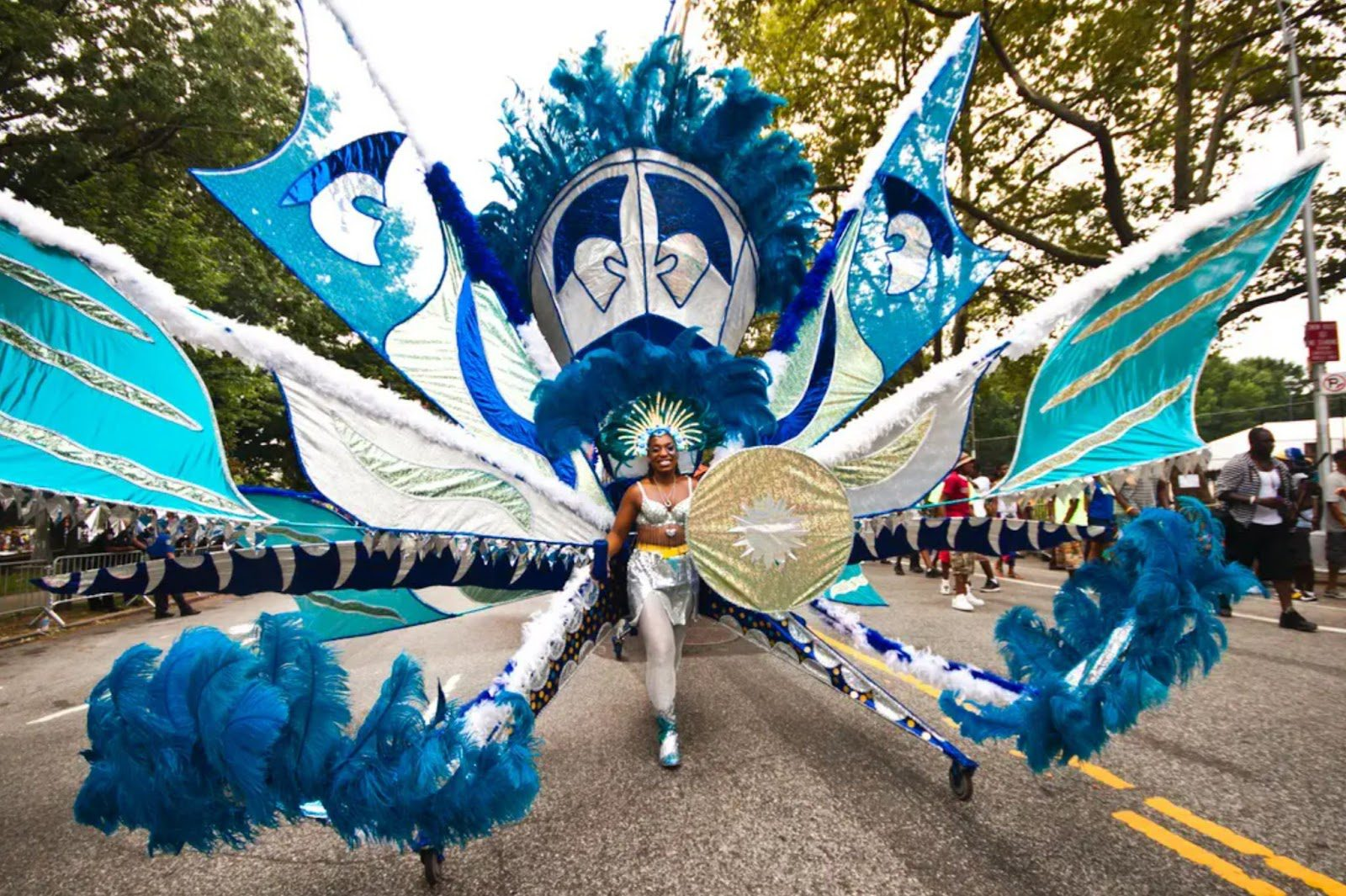
Beginning in the 1960s, the festival took over Eastern Parkway in Crown Heights, “uniting” many islands, including Trinidad and Tobago, Barbados, Haiti, Dominica, St. Lucia, Jamaica, St. Vincent and the Grenadines, Guyana, Suriname, and Belize, among others, in one extravagant and colorful party. The carnival is not to be missed as one of New York City and Brooklyn’s largest and, without a doubt, most vibrant events.
It’s a well-known fact that a large number of Caribbean immigrants who dreamed of “putting down roots” in the United States settled in Brooklyn. So, it’s no coincidence that a large and vibrant community lives here today. In addition, many immigrants landed in Harlem, and in the early 20th century, the Manhattan neighborhood welcomed thousands of islanders. By 1930, a quarter of Harlem’s population was of West Indian descent.
Naturally, along with this significant wave of Caribbean immigrants, a large number of traditions and customs, including cultural holidays, made their way to New York. So, the emergence of something like a carnival was only a matter of time. A Trinidad native named Jessie Waddell took it upon herself to start a carnival in Harlem in the 1920s. The premise of the carnival was quite simple: every year, islanders would throw extravagant costume parties.
Initially, these gatherings with singing and dancing were held indoors in venues like the Savoy and Audubon Ballrooms. The celebrations were modeled after the carnival tradition, which at the time was a well-known global event, usually held in the winter before Ash Wednesday. But unlike the celebrations on the islands, the newcomers in Brooklyn had to celebrate indoors since the city’s cold weather didn’t allow for comfortable street parties.
The winter indoor restrictions didn’t inspire either the organizers or the participants. So, Waddell decided to move the celebration outdoors, and to do so, she changed the date to Labor Day, which typically falls during warm weather, and moved the route along Lenox Avenue, starting at 110th Street in Harlem. And that’s how it all began. The first known Caribbean street carnival took place on September 1, 1947, and each year the event grew bigger and more popular.
Carnival Banned
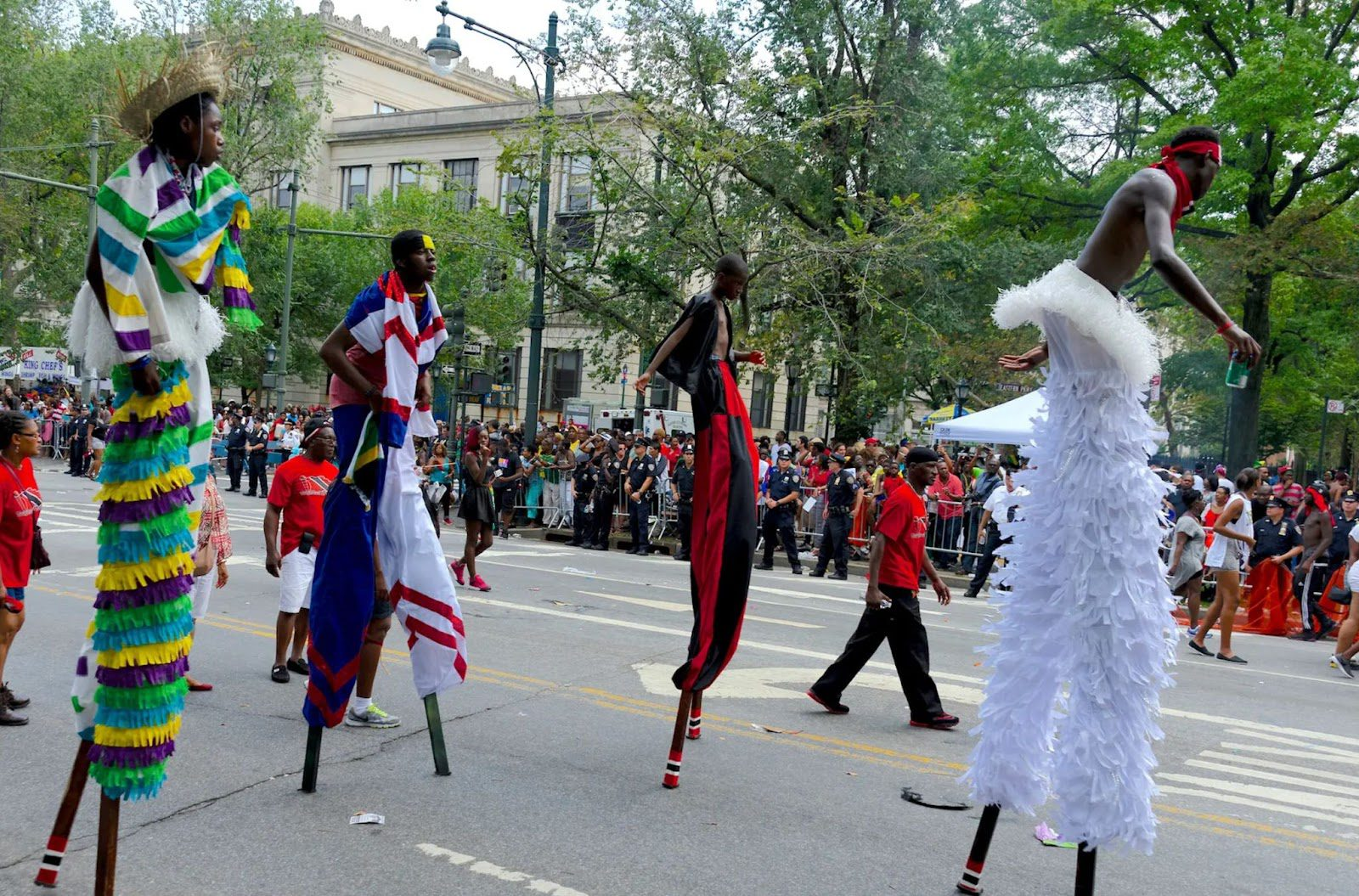
The event didn’t happen without incident. Several conflicts occurred during the parade, after which the city revoked the event’s permit. As a result, the carnival was not held starting in 1964. In 1965, a man named Carlos Lezama created a committee that later became the West Indian-American Day Carnival Association. Lezama and his organization were able to get a permit for another parade, which took place on Eastern Parkway in Crown Heights. Since then, this route has become the main one, and it is still used today.
In 2018, the president of the West Indian-American Day Carnival Association, William Howard, passed away. He had served in that position since 2014. According to Brooklyn Borough President Eric Adams, Bill’s leadership and guidance were indispensable to this Brooklyn institution, as was his role in strengthening the well-being and unity of the borough’s diverse African American and Caribbean American communities.
In 2019, Dr. Jean Joseph was elected as the organization’s new president. Regarding the carnivals, the new president said that he sees his main task as a leader as ensuring safety during the parade and other events. To help achieve this, a public awareness campaign was launched regarding safety rules at such events.
In addition, it was emphasized that such events are very important for preserving the culture of these peoples, and therefore, preserving and holding the parade in the future is a key task for the organization. The core idea was that these costume events are part of the culture of the Caribbean people, and the parade itself is a stage on which the best examples of this culture are showcased. It is therefore crucial to preserve them for future generations.
Music and Dance at the Carnival
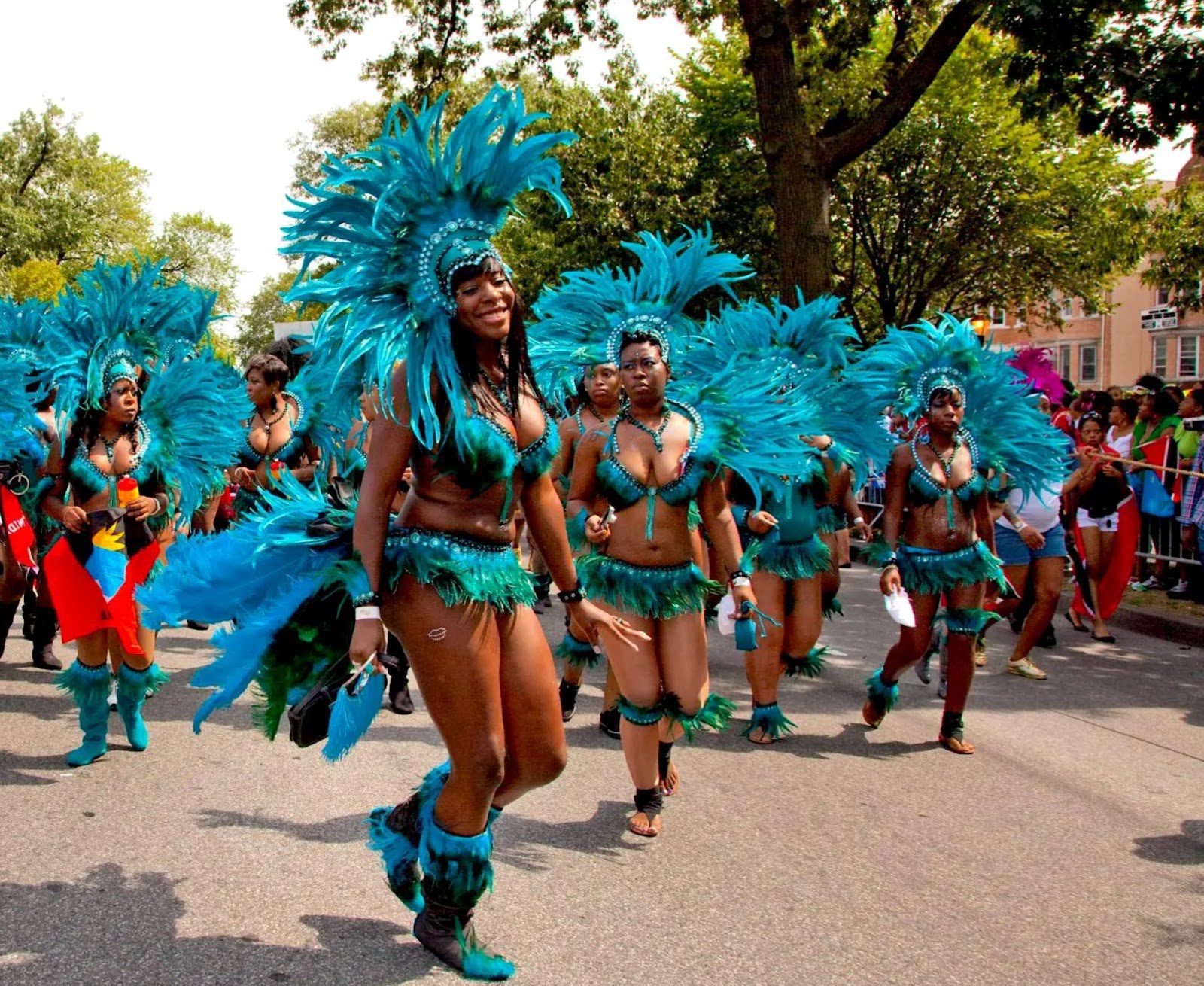
Speaking of the festival itself, it usually lasts five days. The main highlight of this five-day vibrant marathon, which begins on the Thursday before Labor Day, is the spectacular parade. To get an idea of the interest in the event, you should know that it attracts about two million visitors to the Crown Heights neighborhood.
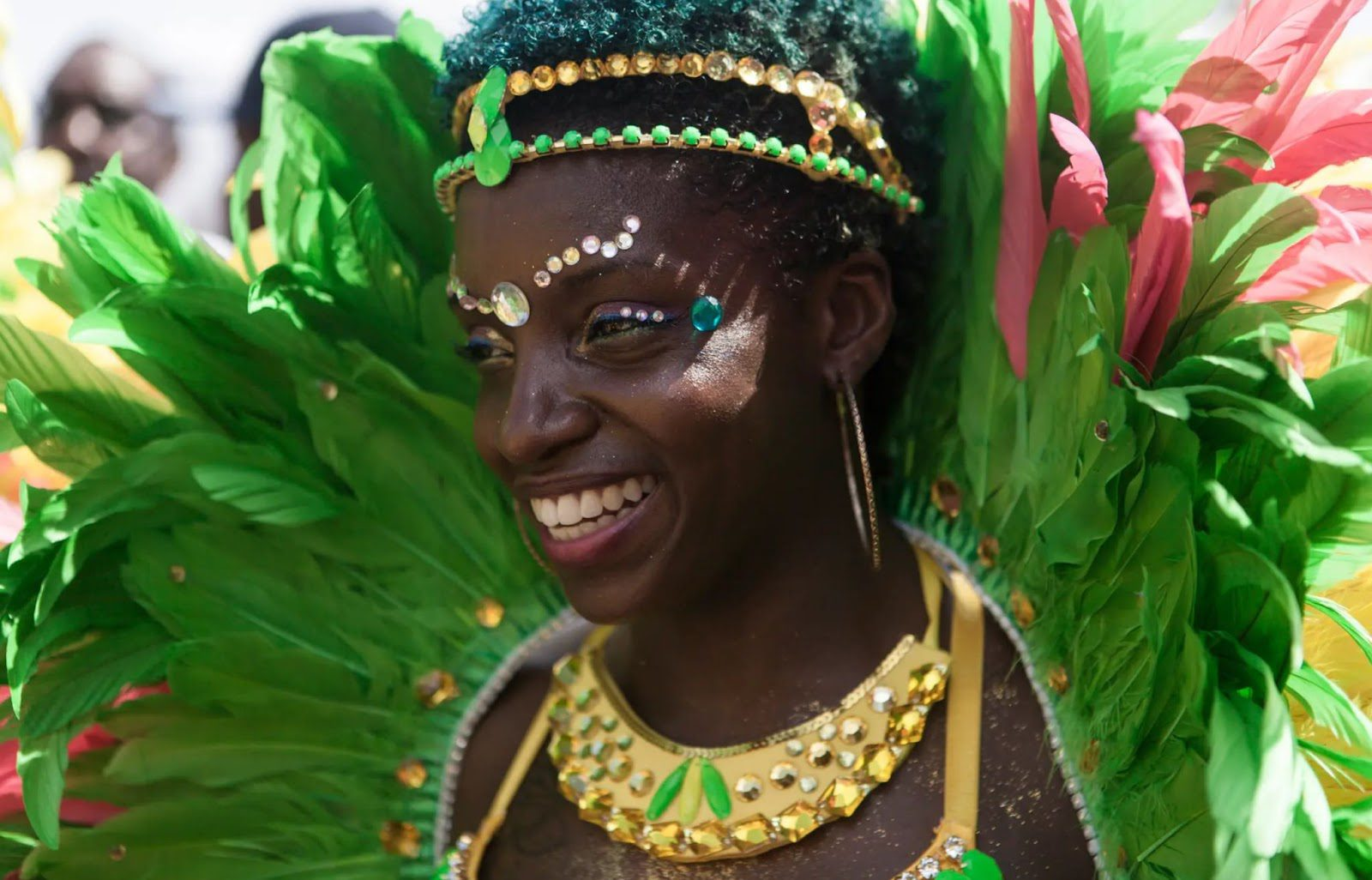
Thousands of participants dance down Eastern Parkway or ride on one of the floats in incredibly intricate costumes. These carnival dresses and costumes, often with a very open style, are decorated with rhinestones and feathers. The vibrant costumes are prepared months before the carnival begins, and the work is taken with all seriousness.
Another very important component of the parade is the music. It adds to the playful and joyous atmosphere. During the procession, visitors can hear Jamaican-style reggae, calypso from Trinidad and Tobago, and soca, a derivative of calypso that incorporates funk and soul. The sound of the steel drum, or steelpan, is most associated with the celebration. By the way, when the British government banned drums in Trinidad in the early 20th century, locals began to use any other items they could find on their property that could be drummed. They discovered that the dented part of an oil drum could produce a powerful steel sound, and as a result, they began to use them. At the Brooklyn carnival, music orchestras compete in a “Panorama” competition, which usually takes place on the grounds of the Brooklyn Museum.
Carnival Food
And a few words about the food, which is no less important than the music, dancing, and costumes. Vendors line the sidewalks along the parade route, selling classic West Indian dishes. You can try meat patties, rice balls, and more. For drinks, there are fruit juices and rum punch. No matter what, the culinary delights at these carnivals will never disappoint.
Many parade participants prefer to start at the very beginning, and for that, they need to visit J’Ouvert, which in French means “daybreak.” That’s right, the entire event begins with a pre-dawn party that marks the opening of the carnival. The celebration’s origins date back to the time of slavery and are based on the masquerade balls of French settlers in the 18th century. Since slaves in Trinidad were forbidden from attending, even after they were freed, they created their own carnivals to mock their masters and celebrate their newfound freedom.
Sources: