

Many people consider comics to be solely for children, but that’s not the case. Graphic novels are just as much works of art as paintings, books and statues. Many adults continue to read comics because their diversity can satisfy the tastes of a wide range of readers. The authors of graphic novels are considered full-fledged artists.
Not every comic fan knows who founded this genre and authored the first comic. It was Will Eisner, a Brooklyn-born Jewish artist who gifted the world with comics. Learn more on our website, brooklynski.info.
The Vanguard Illustrator
William Eisner was born on March 6, 1917. He grew up in a multicultural family, with a Hungarian father and a Romanian mother. It was his father who instilled in William a love for the arts. Eisner Senior valued art in all its forms and was a broad-minded individual. He raised his son to be the same way.
From childhood, the future illustrator had a passion for reading and not just fiction. In his early years, in order to financially support his family, he sold newspapers on Wall Street, but before that, he read them from cover to cover. It was rare to see William without a book or newspaper in his hands. His vivid imagination led him to start drawing. He wrote his first comic during his school days. Eisner attended the DeWitt Clinton High School of Art, where he had a loyal school friend named Bob Kane. Together, they created the characters of Batman and other famous comic book figures.
He created his first major work in the 1930s, a time that witnessed the peak of graphic novels. Comics were gaining popularity and it was during this era that Will Eisner emerged. “A Contract with God” marked Eisner’s first graphic novel and it was met with moderate success. However, it was his second novel, “The Spirit,” that truly propelled him to fame. This was the story of detective Denny Colt and the comic was published as a supplement to a newspaper column. Though not a groundbreaking achievement in itself, it served as a springboard to Eisner’s colossal success.
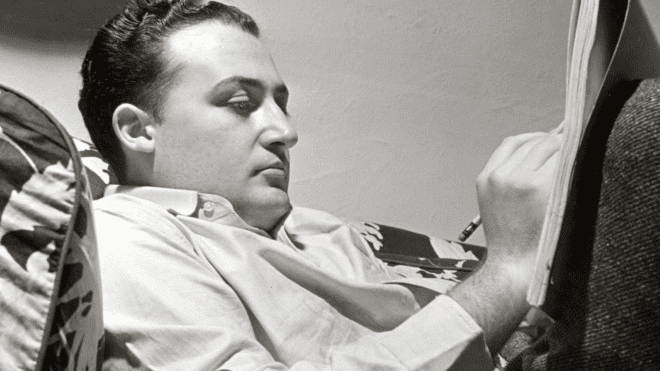
After the success of “The Spirit,” he devoted a considerable amount of time to working on educational comic book publishing and commercial projects. It wasn’t until the 1970s that he returned to creating his own personal stories. Eisner delved into understanding the traditions of the comic book medium and his first work became a lifelong pursuit.
Eisner was not only the first official comic book artist but also a pioneer in exploring graphic novels. He laid the foundation for the world of graphic novels.
What did the “father” write about?
Eisner’s works themselves became a manual for many aspiring animators. Several generations of artists learned from his works. At first glance, comics may seem simple, but they are much more complex. A comic is not just a picture, it is a story. Everyone can write, but not everyone can write a book. Similarly, not every artist can create a graphic novel.
Despite comics later becoming primarily associated with children’s entertainment, Eisner depicted the state of society, patriotism, strength and the belief of the heroes in his works. His early comics were filled with profound meaning. His uniqueness, which later influenced the ideas of other animators, lay in creating stories about ordinary people. His characters didn’t possess superpowers at the beginning of the story, but by the end, they became true heroes. This is what captivated the readers.
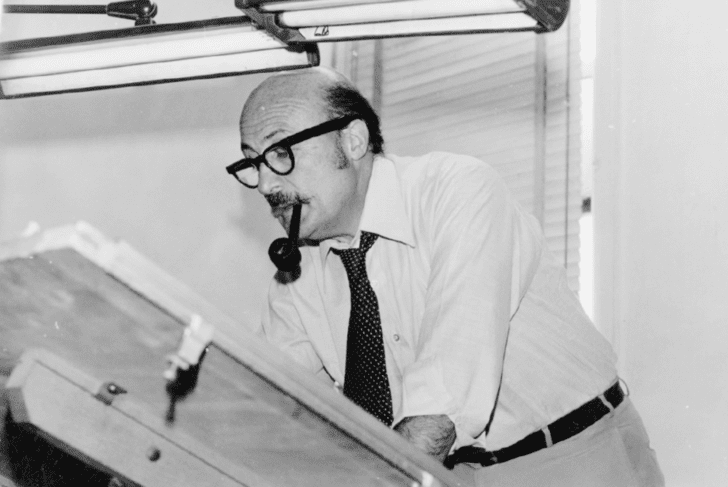
Eisner not only wrote comics himself but also sought out illustrators with similar passion. He and Jerry Iger were the owners of the “Eisner and Iger Studio,” where Bob Kane (the creator of Batman) and Jack Kirby (one of the creators of Spider-Man) made their first sketches.
The fandom of comic books grew so immense that an entire festival was organized for graphic novel enthusiasts called “Comic-Con.” It is at this annual gathering that the Eisner Award is presented, serving as the comic book world’s equivalent of the Oscars.
As a young immigrant boy who sold newspapers, he could never have imagined that he would one day become a pivotal figure in the world of comics.