

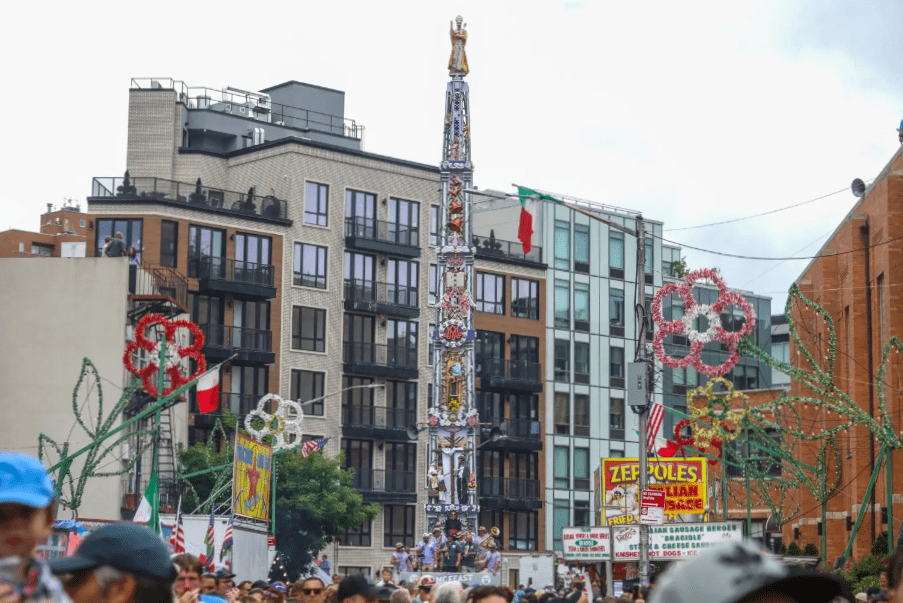
In ancient times, an amazing feast of the Our Lady of Mount Carmel was born in Italy. During the celebration, Italians built a 72-foot tower in honor of the Virgin Mary, also referred to as Giglio. One day, Italians imported this celebration to Williamsburg. It transformed into a real festival that glorified Brooklyn and outshone Little Italy in Manhattan. Find out more at brooklynski.
From the town of Nola
In the 1880s, there was an influx of Italian immigrants to Brooklyn. New citizens from the town of Nola brought their traditions and holidays with them. Leaving their country out of necessity, they missed their homeland even more, so they tried to recreate it in Brooklyn. It was then decided to revive the Giglio Feast. Since 1903, it has become an annual celebration and a grand festival.
The history of the feast is very interesting. According to a legend, in 410 AD, pirates captured Nola town. North African barbarians enslaved the young people from the small town. Once, Bishop Paolino met a woman whose son was killed by the pirates. He was so moved by her story that he decided to replace her son. The selfless act of the clergyman so impressed the Turkish sultan that he released Paolino to his homeland in Nola.
The local residents were extremely happy to hear this news. They saw it as a sign of God. Locals greeted Paolino with flowers (lilies), which in Italian are called Gigli. Thus, the holiday in honor of lilies and a saint appeared. This is what Paolino was considered to be.
Since then, every year, florists have competed with each other to create the largest lily sculpture. That was the beginning of the festival’s history.
Transformation
Old traditions began to change with time. Fragile and short-lived lilies were replaced with wood. Since the 1960s, the tower has been made of metal. Paper decorations were created in the form of flowers and angels depicting St. Paolino. Using paper flowers was a more sound reason and less expensive.
The statue always appeared to be bulky and huge. It took a hundred men to set it up on the moving platform. The statue required a strong foothold.
The Giglio Feast has always been celebrated for 12 days in July. During this time, through music, national cuisine and entertainment for children, a small piece of Italy is recreated in Williamsburg.
The festival culminates in the big parade with the statue through all the streets of Williamsburg. This procession is accompanied by live music and the O’ Giglio’e Paradiso orchestra.
In the olden days, only Italians celebrated this festival. In 2019, the festival organizers faced some difficulties. They needed to find volunteers to lift the statue. Williamsburg is no longer exclusively an Italian neighborhood. As a result, there is a small number of people residing there who still know about this holiday. However, the organizers were still looking for men with Italian roots to lift the statue.
Although the Giglio Feast is not an official holy day, it is truly honored as a religious event.
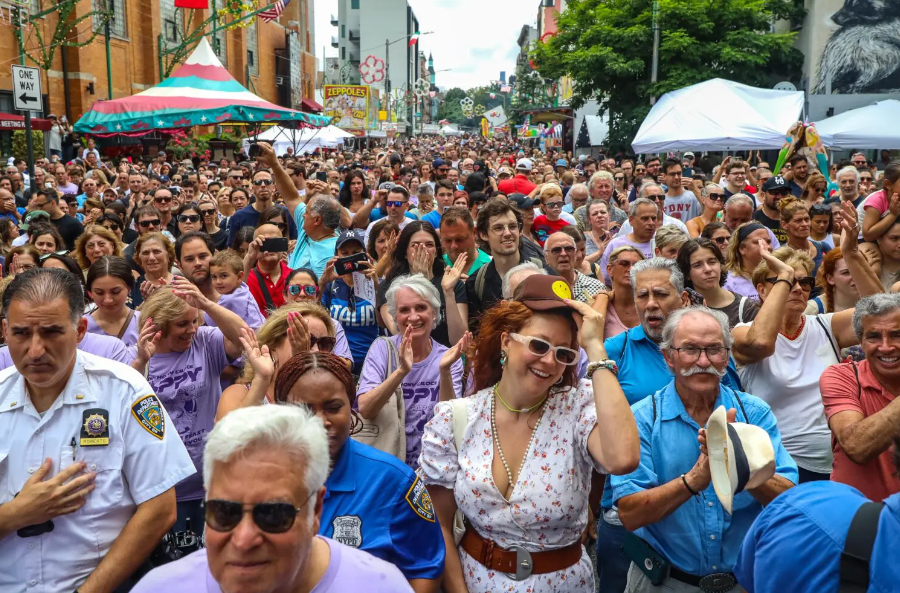
In Williamsburg, the number of Italian residents has significantly decreased. But those who still venerate the traditions continue to come to Brooklyn to become a part of this festival and remember their roots.
In New York, a whole Giglio community has been formed. So Brooklyn will not be the only place to hold such a fest. The Bronx also has its own celebration with the statue of St. Paolino and festivities.
Religious-themed festivals help people learn more about the customs and cultures that surround them. There are over a million Italian-Americans living in New York City and their culture and traditions are important.