

Success can take various forms. Incredible heights can be achieved in any field. However, the secret to success remains the same: hard work. Richard Axel proved this to be true. He is known in history as a successful neurobiologist from Brooklyn. Find out more on our website, brooklynski.info.
Borough of Immigrants
The future scientist was born in 1946. His family belonged to Polish-Jewish immigrants. It’s not surprising that their new home became Brooklyn. This borough has always been a haven for many immigrants.
Richard’s childhood followed a typical path. Stuyvesant School, the emergence of a love for science and sports. Richard Axel was quite tall, which allowed him to become part of the basketball team. He didn’t dream of a basketball career, but it became a great source of joy.
Axel pursued higher education at Columbia University and Johns Hopkins University. It was university life that led him to the realm of great medicine and his first significant discoveries.
In the 1970s, together with other scientists, he discovered a method that made it possible to incorporate foreign DNA into a host cell. To them, it seemed like something out of science fiction.
They patented their innovation, but unfortunately, the rights to the patent belonged to Columbia University, where Axel was teaching at the time. The university earned a profit of $100 million annually until the year 2000. Axel’s invention, along with his colleagues, not only brought them fame but also elevated the reputation of the university itself. In the United States, it is very important.
In addition to teaching and research, Richard Axel also wrote scientific articles. His most notable work was written in 1991, focusing on olfactory receptors and genomic research in mammals. His work paved the way for genetic and molecular analysis of olfactory mechanisms.
The Matter of a Lifetime
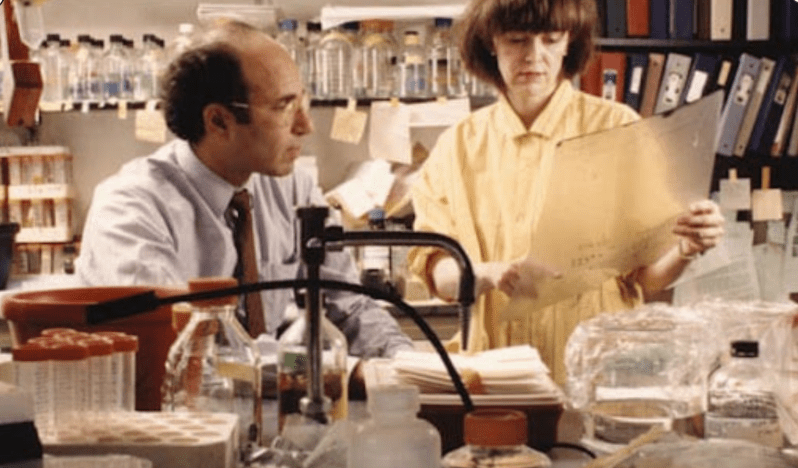
Among all the wonders within the human body, Axel was particularly fascinated by the sense of smell. He delved into the study of how the brain interprets smells and odors. His discoveries not only influenced the field of neurobiology but also had an impact on other related branches of medicine, such as immunology. Under his guidance, the laboratory at Columbia University became the first to identify HIV and the immune receptor CD4. It was a crucial first step towards understanding this devastating disease. CD4 antigen is one of the receptors of the human immunodeficiency virus (HIV-1). HIV remained a mystery locked away behind seven seals for scientists. Its origins, particularly during its initial appearance, were shrouded in profound perplexity.
His research on human genes and the genome led to a discovery that allowed any gene to be connected to any cell in an organism. This was a major breakthrough in the study and treatment of HIV and AIDS. The mechanism of gene integration into cells enabled the production of essential proteins in the necessary quantities. It was for the identification and study of genes involved in odor recognition that he received the highest honor in the scientific world – the Nobel Prize in 2004. In addition to that, he received other equally significant awards.
The study of genes became his life’s work. In 2016, together with other scientists, he sought to urge the world to embrace genetically modified organisms. What the UN and Greenpeace fought against held far greater significance. The creation of genetically modified products marked the first step towards altering human genes.
Most people only see the negative aspects of this, forgetting about genetic diseases. When scientists are able to modify the human DNA code, there will be a chance to treat many terrifying illnesses that were previously incurable because they are encoded within the DNA chain.
However, the benefits of GMOs primarily apply to food products. Modified grains are capable of withstanding adverse weather conditions and increasing fertility. Opponents of GMOs consider them harmful because they are artificial. After all, it is unnatural for tomatoes to be preserved for half a year. But the prospect of genetic engineering development is much broader and more significant than the consequences of GMOs.
In the world of medicine and science, Richard Axel has become known for his significant discoveries. His diligent work has helped him achieve success in his field. However, what some perceive as a tremendous achievement of human intellect, eco-advocates view as harm. To some, he is a great scientist, while to others, he is a major pest.