

Brooklyn-based multidisciplinary artist Mickalene Thomas is renowned for her paintings, collages, photography, video, and installations that incorporate elements of art history and popular culture to convey a contemporary vision of female sexuality, beauty, and power. Blurring the lines between object and subject, figurative and abstract, real and imagined, Thomas creates intricate portraits, landscapes, and interiors that explore how identity, gender, and self-awareness are shaped by the way women are represented in art and popular culture. Learn more about Mickalene Thomas at brooklynski.info.
Black Is Beautiful
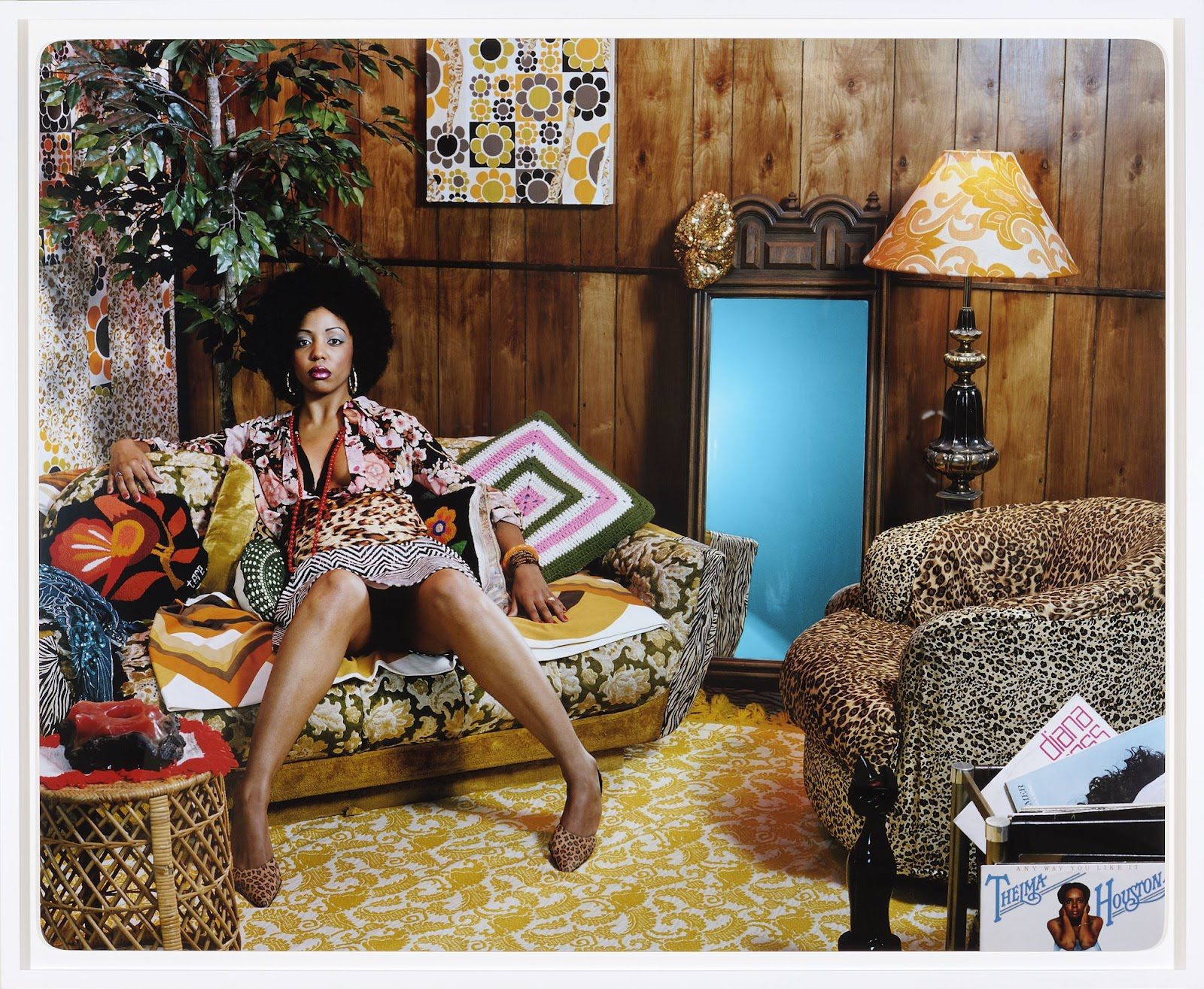
Drawing inspiration from sources as diverse as Édouard Manet’s nudes and the 1970s Black Is Beautiful movement, Thomas challenges the traditional representation of Black women in the canon of art history. Her artistic practice is deeply collaborative, celebrating the unique beauty and individuality of each model she depicts. Posed in elaborately decorated interiors and often gazing directly at the viewer, Thomas’s subjects exude a sense of self-possession, reinforcing her message of empowerment for both her models and her audience.
Best known for her large-scale, highly textured paintings that combine rhinestones, acrylic, and enamel, Thomas redefines conventional standards of beauty and femininity. Her work is the result of extensive study of art history and classical portraiture, landscape, and still-life traditions. However, her figures refuse to be passively consumed—they are powerful agents who directly confront the viewer. Material culture plays a central role in her work, shifting the power dynamics as she examines gender, sexuality, artifice, femininity, strength, and glamour through a modern feminist lens.
A Complex Relationship with Her Mother
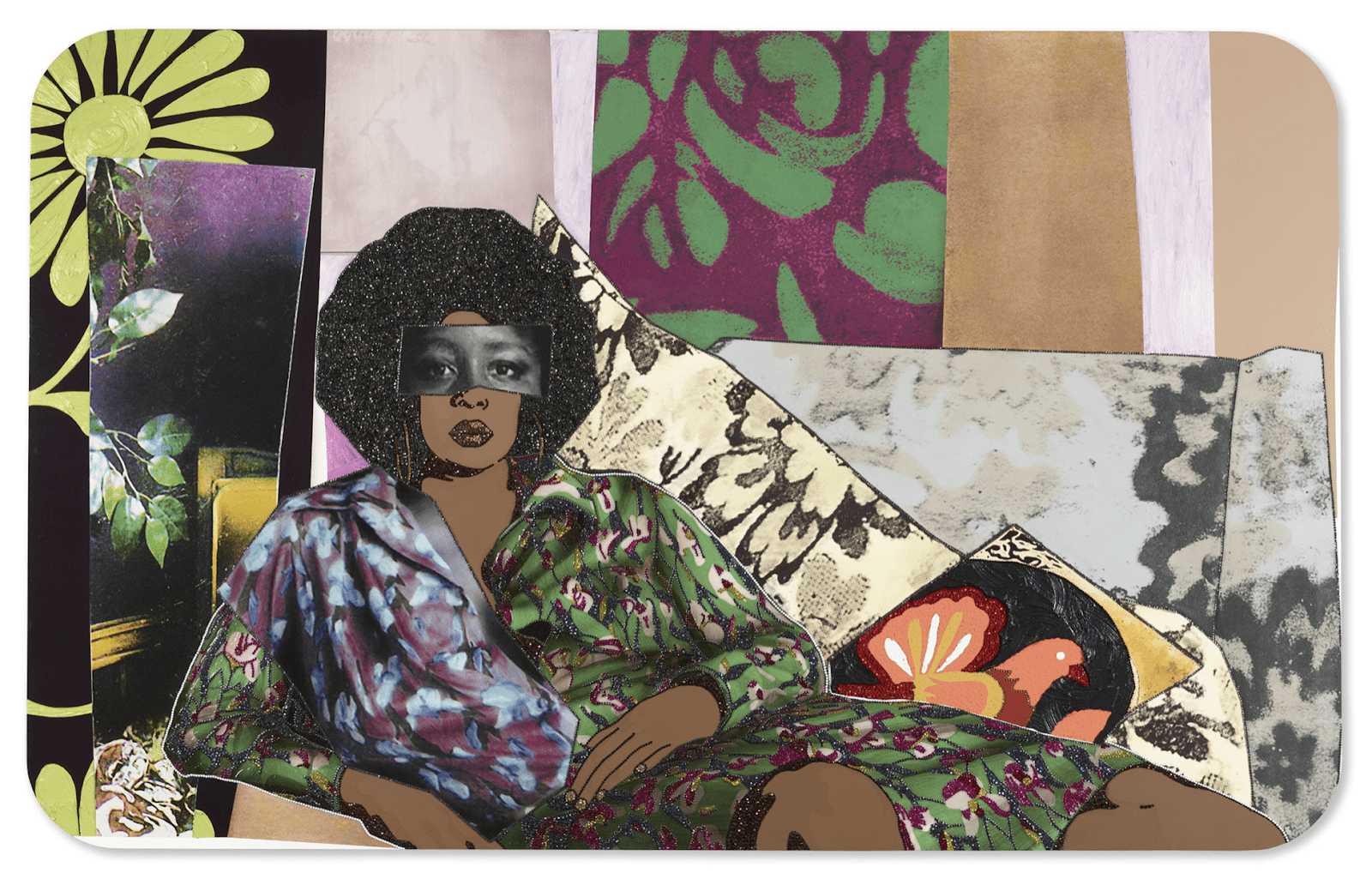
Although Mickalene Thomas lives and works in Brooklyn, she was born in Camden, New Jersey. Raised by a single mother who was a fashion model in the 1970s, Thomas grew up in an environment infused with creativity and culture. Her mother introduced her and her brother to Buddhism, but their relationship was deeply complicated—marked by both intimacy and tension, largely due to her parents’ struggles with addiction.
At the start of her artistic career, Thomas immersed herself in the dynamic worlds of artists and musicians, which encouraged her to begin producing her own work. She has noted that fashion has always been a significant source of inspiration for her art.
The power of Thomas’s work is rooted in deep engagement with the history of painting—its masterpieces, traditions, and generations of viewers. However, her work does more than simply reference art history; it disrupts and reclaims space within a tradition that has historically excluded, diminished, or caricatured Black people—especially Black women.
At the heart of Thomas’s practice is a proclamation of visibility—both her own and that of other Black women. She inserts Black female bodies into the history of art, positioning her models in iconic poses and settings. Yet, she does so in bold, defiant ways—using rhinestones, jewel-toned acrylics, and retro prints on expansive canvases that demand attention.
Remixing Pop Culture References
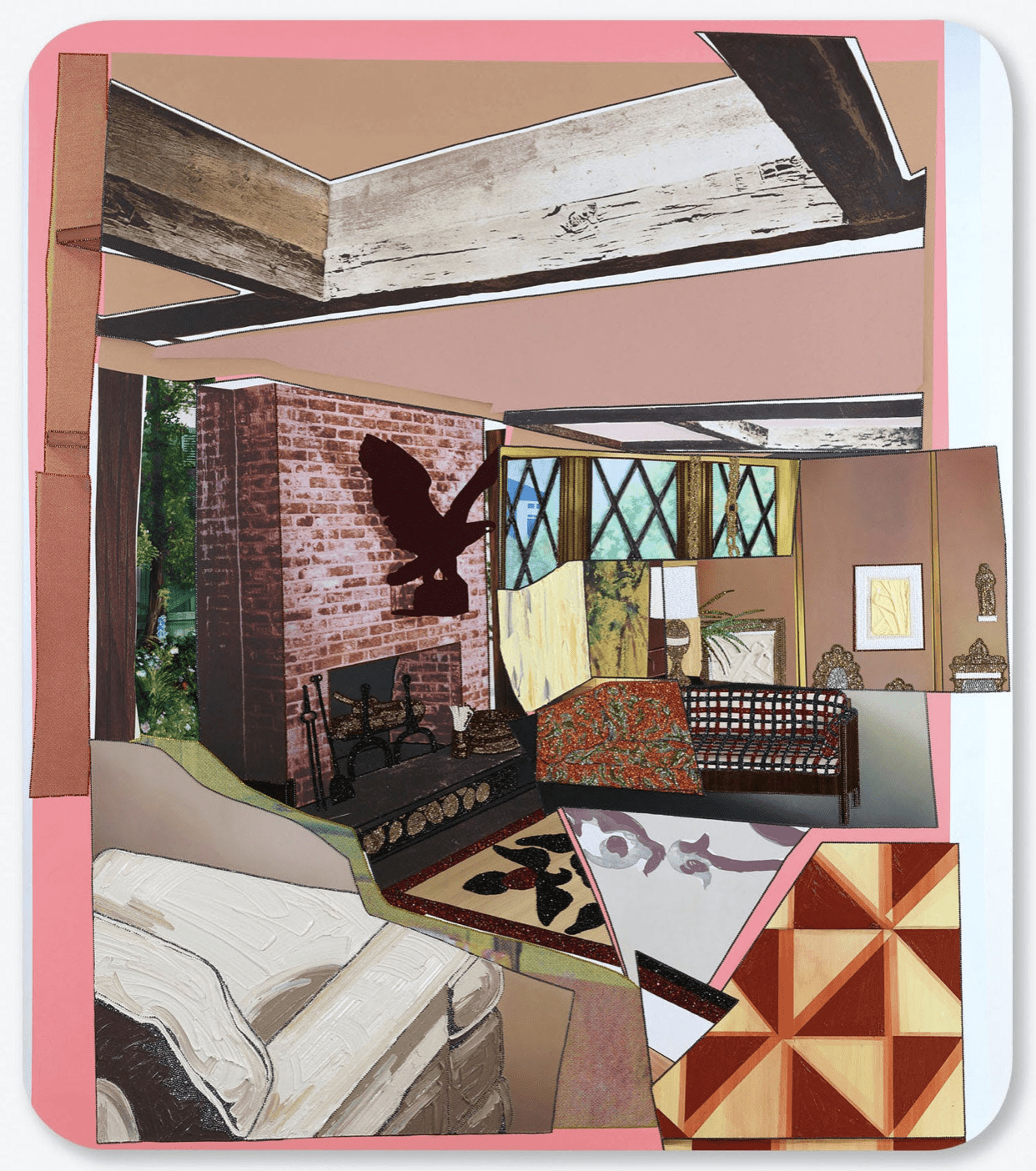
While Thomas’s paintings and collages are bold, striking, and seemingly effortless, a closer look reveals a layered seriousness. Her work celebrates Black women while also showcasing her deep knowledge of art history, drawing inspiration from artists such as Manet, Matisse, Ingres, Courbet, and Romare Bearden.
By remixing pop culture references and art historical imagery in works that celebrate African American women, Thomas challenges traditional expectations and stereotypes of female beauty within Western painting traditions. Her subjects may strike poses reminiscent of Impressionist odalisques, but they remain self-possessed and autonomous, framed by vibrant textiles and glamorous décor.
Thomas not only reverses the traditional power dynamic between passive sitters and active viewers in art history but also advocates for disrupting gender dynamics beyond the confines of painting.
The Role of Photography
Although Thomas primarily identifies as a painter, photography is a fundamental aspect of her artistic process. She first began photographing herself and her mother while studying at Yale University, later expanding to photographing family members, friends, and lovers.
This approach raises a crucial question that challenges the traditional concept of artistic genius:
Can portraiture be as much about the artist’s perspective as it is about the sitter?
Thomas explores this idea by balancing her artistic vision with the individuality and agency of the people she portrays. In some of her works, she selectively pixelates certain elements of her figures or backgrounds, further emphasizing her signature collage-like aesthetic.