

Brooklyn is, by its very nature, an almost perfect “movie neighborhood.” Just look at the famous, world-renowned Brooklyn Bridge—the star of hundreds of films and TV show opening sequences. Although in the early days of television, filming often took place in studios, the spirit of Brooklyn seemed to be projected from the very beginning as a living set. The neighborhood turned out to be dense enough, contrasting enough, and recognizable enough that television, as soon as it gained momentum in the mid-20th century, made it one of its favorite on-screen worlds.
The history of television has given us countless shows, some of which have become true cultural touchstones of their era: from classic crime dramas like *Blue Bloods*, with its cozy Brooklyn neighborhoods, and *Boardwalk Empire*, which captured the gritty atmosphere of the local streets and the old shipyard, to Broad City—a very “Brooklyn” series in spirit about hipster adventures in Williamsburg and Gowanus. And, of course, the later Brooklyn Nine-Nine, which directly played with the recognizable image of the neighborhood as a modern, slightly ironic urban environment. Admittedly, the irony also lies in the fact that this “Brooklyn” precinct was actually filmed under the scorching sun of Los Angeles—presumably so that the tough New York cops wouldn’t freeze their fingers off during nighttime stakeouts.
But before talking about that very first TV series set here back in the 1950s on brooklynski.info , it’s worth making an interesting observation. In shows from the last century, Brooklyn is almost always portrayed as a simple, working-class, somewhat noisy neighborhood where life doesn’t need to be stylized—it’s already textured enough. In contrast, in modern interpretations, it is now a space of hipsters, expensive lofts, and gentrification, where even a random coffee shop looks like a set design. And it is precisely against this backdrop that it is particularly important to return to the very beginning of Brooklyn’s television mythology—to “The Honeymooners” of the 1950s, when the neighborhood on screen was not yet a symbol of fashion but had already become the perfect material for a comedy about everyday life.
“The Honeymooners” — початок
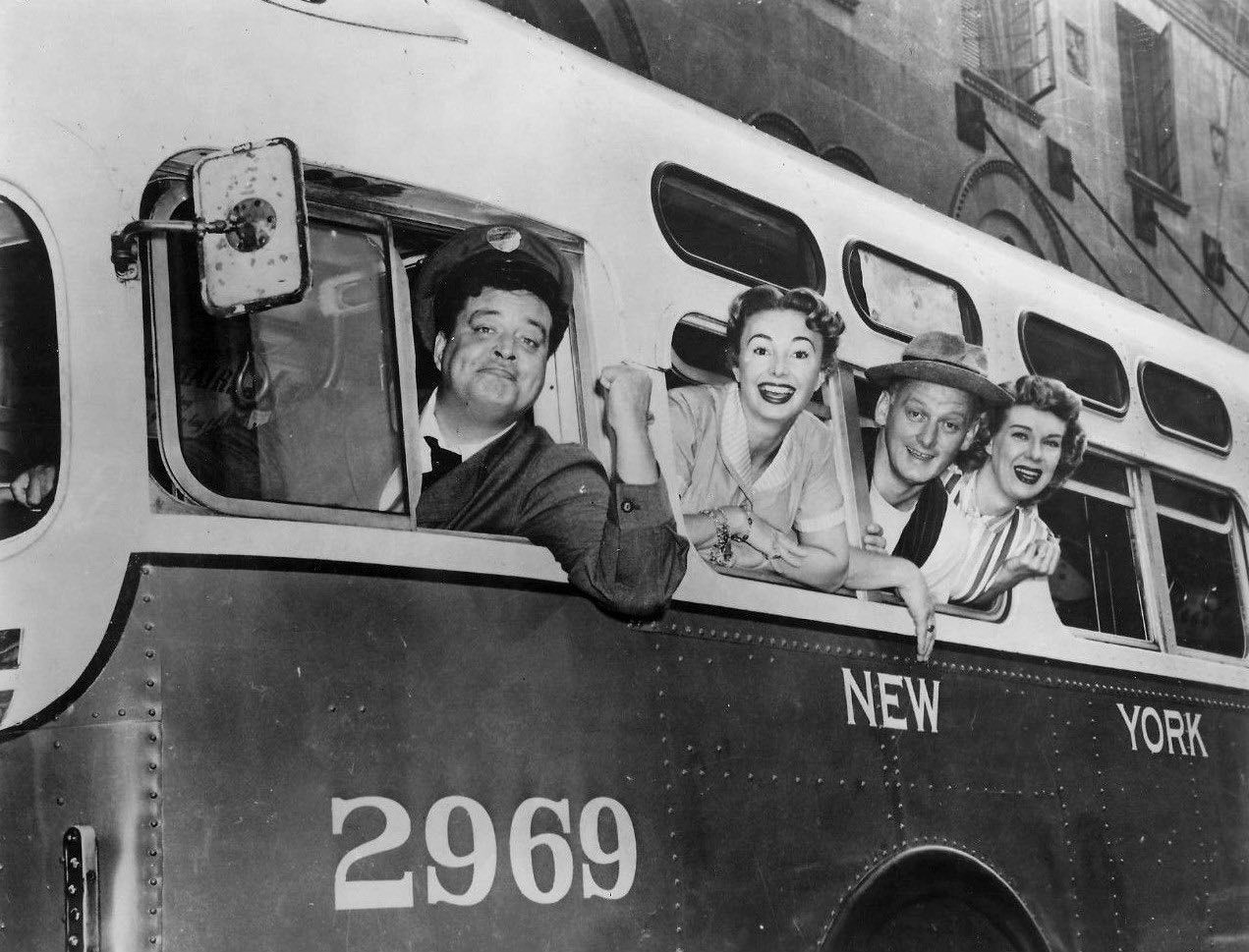
In the reality of 1950s television, everything was far less romantic than it might seem today. Bulky equipment, limited camera mobility, and the general “studio logic” of early television effectively dictated the rules of the game. Most series were produced in studios, where urban areas had to be recreated in a simplified manner—using a few sets, painted backdrops, and minimal sense of depth.
Against this backdrop, “The Honeymooners” comes across as an almost stubbornly realistic project that sought not so much to “show New York” as to recreate the feel of Brooklyn as a social environment. The creator and driving force behind the series was Jack Gleeson—a man who essentially carried the project on his own charisma and stage presence.
Formally, the show grew out of his short sketches on the television program *Cavalcade of Stars*, and only later took shape as a standalone sitcom. The writing process proceeded at a frantic pace, and Gleason himself—due to his aversion to rehearsals—forced his colleagues to work with the utmost concentration.
Actors and Characters
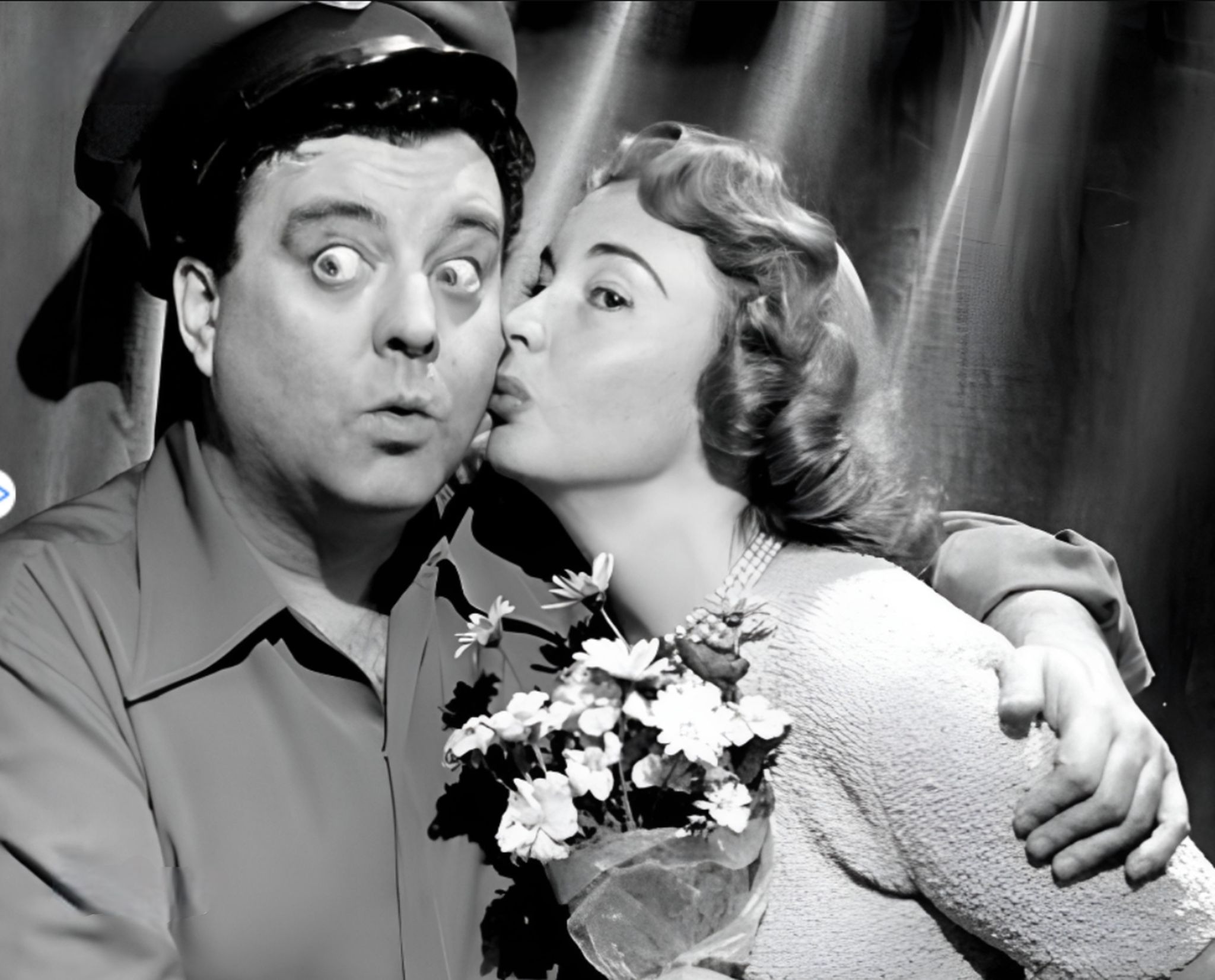
After numerous auditions and television sketches, Audrey Meadows, Art Carney, and Joyce Randolph were cast in the lead roles, while Gleason himself remained at the center—playing Ralph Kramden, the classic “little man” of the big city.
Although the series had only one classic season of 39 episodes in the format of a standalone show (1955–1956), these characters returned to the screen in various television formats and special episodes over the next decades. The series was filmed quickly, almost like a stage play—in a live-recording format in front of a studio audience of a thousand, which gave the scenes a sense of presence that no set imitation of Brooklyn streets could provide.
And this is where the main effect comes into play: viewers—primarily New Yorkers and Brooklyners—did not perceive the series as fiction but as a mirror of their own everyday lives. Working-class Brooklyn, with its cramped apartments, domestic squabbles, dreams of “a better life,” and endless balancing act between irony and exhaustion, was recognizable down to the last detail. That is precisely why “The Honeymooners” became not just a comedy of its time but an early television portrait of Brooklyn—even before the neighborhood began to be transformed into an aesthetic brand.
Production and creative processes
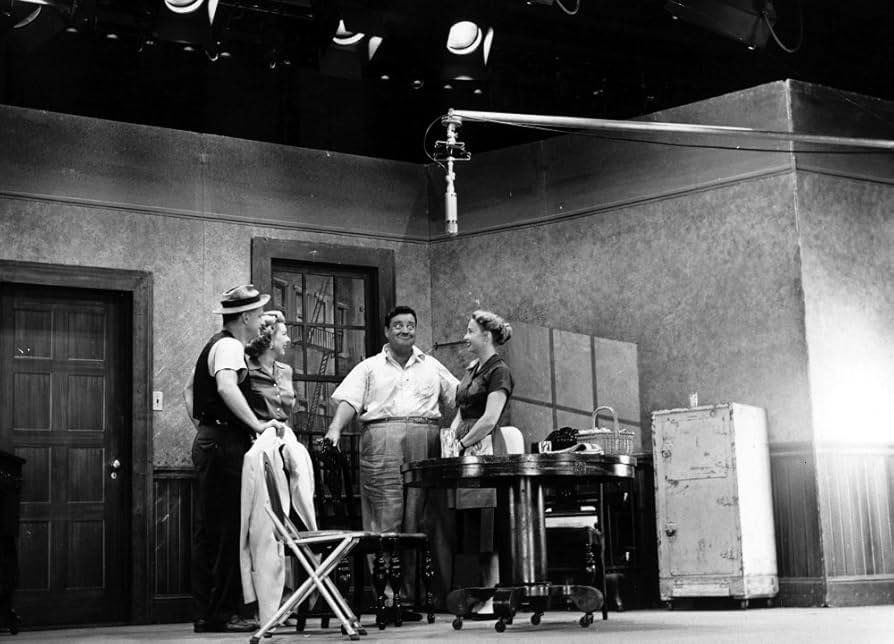
The second layer of “The Honeymooners” is less about the “plot” and more about the production risks, which in the 1950s seemed almost like the daily norm. Individual episodes of the series were created under conditions where television filming was more like theater with cameras than cinema in the modern sense.
Live recording in front of a studio audience meant one thing: mistakes couldn’t be edited out, pauses couldn’t be cut, and the comedic rhythm either held together or fell apart right before the viewers’ eyes. That is precisely why the most interesting episodes of the series aren’t just “good scripts,” but mechanisms that worked perfectly thanks to phenomenal on-screen chemistry and instant reactions.
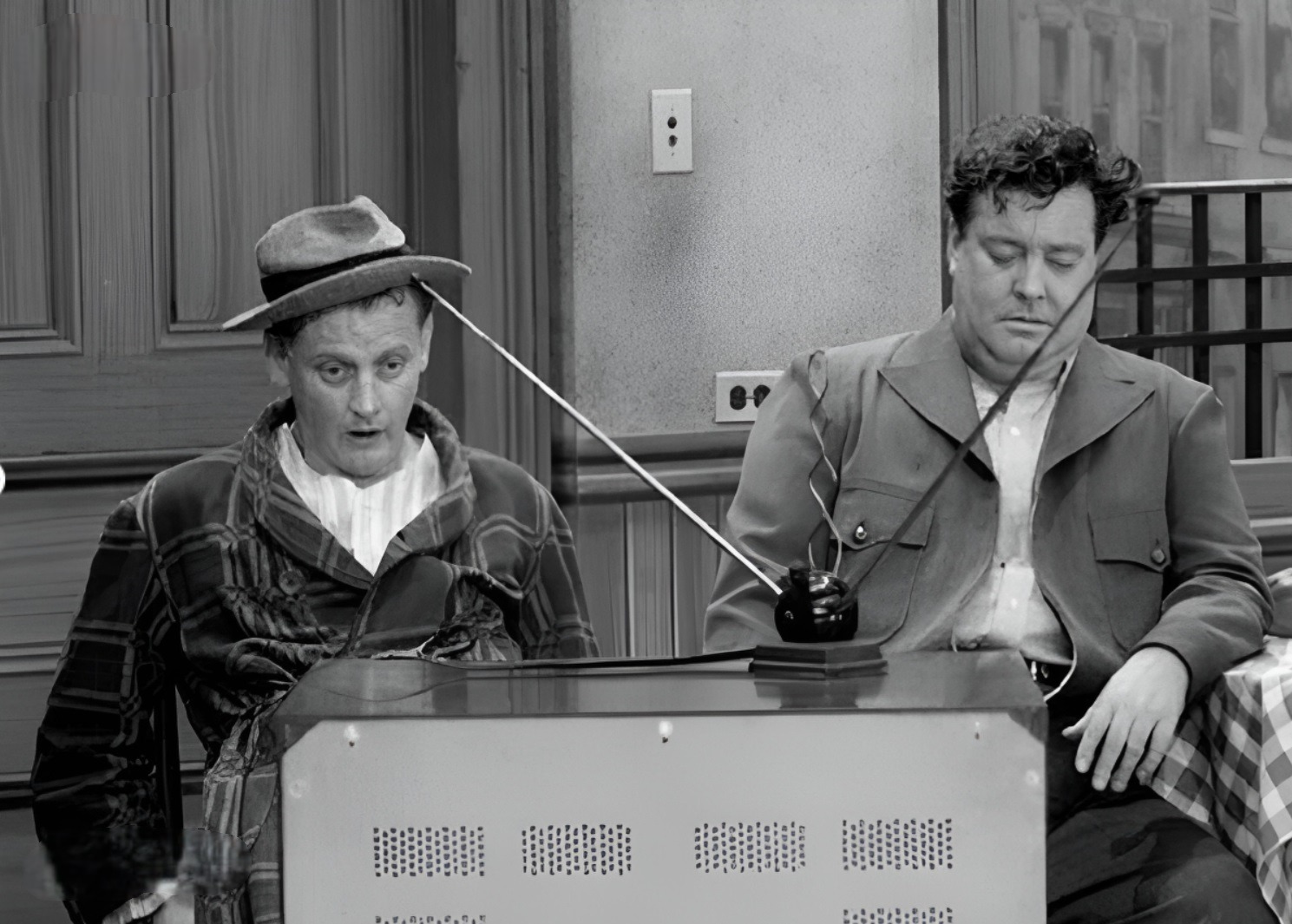
For example, the “TV or Not TV” episode functions as a satirical story about obsession with new technology: Ralph Kramden buys a TV on a payment plan with his neighbor Ed Norton. However, the coveted status symbol instantly turns into a source of domestic chaos when the friends begin a fierce battle over who will watch what.
Another iconic episode—*The $99,000 Answer*—already plays on the theme of an instant social leap. Here, the plot structure is quite simple: the protagonist suddenly gets a chance to change his life by becoming a contestant on a TV game show, but the series’ classic logic of “big dreams in a small space” prevails once again. The comedy arises not from the situation itself, but from how the characters fail to fit into their own notions of success.
Another telling example is “Better Living Through TV,” where television is no longer just entertainment but a platform for yet another scheme. In an attempt to get rich, Ralph drags Norton into a plan to sell a batch of kitchen gadgets through a live TV commercial. And here, thespecific nature of the writing team’s work is particularly evident: the scripts were constructedas a series of precise comedic punches designed to land in real time amid the chaos on set.
These episodes demonstrate the key point: the humor in “The Honeymooners” didn’t rely on complex plots, but rather on a very precise sense of rhythm and relatability.
We remember you, “The Honeymooners”
Ultimately, “The Honeymooners” left a legacy that far outlasted its formal run on the air. The very format of the “working-class couple in a cramped apartment”—built on character clashes and the minutiae of daily life—became almost a template for the American sitcom. As early as the 1960s, this approach was directly reimagined in The Flintstones, where the family structure, the dynamics of their arguments, and even the comedic rhythm essentially mirrored the Crumden model.
This principle—where everyday life becomes the source of comedy rather than merely a backdrop—eventually became the standard in television. From character interactions to scene structure and the pace of dialogue, “The Honeymooners” effectively established the grammar of the genre. And although later sitcoms became technically more sophisticated and visually diverse, the very idea of “little people in the big city” who survive through humor and bickering remained the foundation of television comedy for decades to come.
Sources:
- https://www.spokesman.com/further-review/the-honeymooners/
- https://www.cbsnews.com/pictures/the-honeymooners-a-tv-classic/2/
- https://www.womansworld.com/entertainment/classic-tv/the-honeymooners-tv-show-rare-behind-the-scenes-photos
- https://www.nytimes.com/2017/10/10/theater/the-honeymooners-review-papermill-playhouse.html