

John Arbuckle was one of the wealthiest men in Brooklyn. Furthermore, according to his contemporaries, he was quite generous: he and his wife engaged in many important civic initiatives, and they even launched some of their own. For example, Arbuckle converted an old ship in New York Harbor into a worker housing unit. He named it the Deep Sea Hotel. The businessman also established a vacation home in New Paltz named Mary and John Arbuckle Farm, where employees could rest. John Arbuckle valued vacation and leisure, which were available for the average factory worker only in limited amounts, and attempted, at least briefly, to deprive them of their regular job routine. He coordinated boat trips for children and vacation trips for his employees. Arbuckle also founded a children’s publication called Sunshine Magazine. Read more at brooklynski.info.
History of the ship Jacob A. Stamler
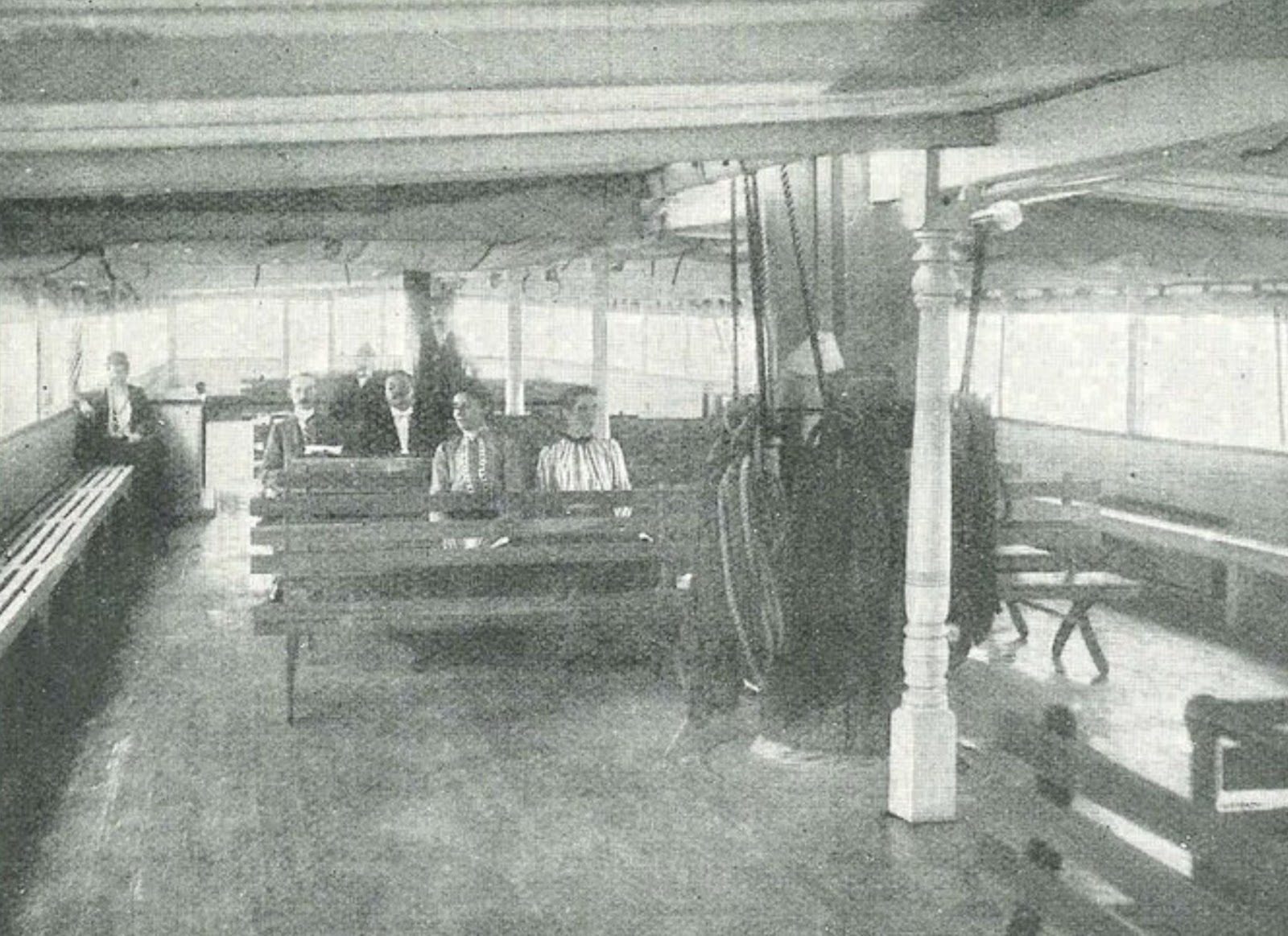
For ten years, the Jacob A. Stamler yacht housed more than 70 working-class girls and boys. It was anchored on the Hudson and East River banks in New York City. As a result of its new status as a residential property, the ship received a new name: the Deep Sea Hotel. This hotel had minimal accommodation requirements. Moreover, advertising at the time promised that the poorer you were, the more happily you would be welcomed here, as long as you were polite, respectful and decent.
The Jacob A. Stamler was built on the Thomas Stack shipyard at North Sixth Street in Williamsburg and launched on October 11, 1856. Its owners were William Laytin and Edwin H. Hurlbut, well-known New York shipping agents whose company on South Street was already dispatching numerous coastal and transatlantic ocean liners even before the outbreak of the Civil War. Minority owner Jacob A. Stemler was a New York businessman who made a fortune in the city’s profitable meat markets.
As he was very wealthy, the businessman could afford to buy a ship weighing over a thousand tons and standing around twenty feet tall, which was typical of large merchant ships built in the 1850s. The Jacob A. Stamler was a sailing vessel that followed a specified course and schedule. Its original destination port was Antwerp, Belgium, but following a change of agent, the ship coursed between New York and Le Havre, France.
A whole new life for the ship began after it was purchased in 1899 by a man named John Arbuckle. Arbuckle was a wealthy man who worked to become a millionaire. John Arbuckle relocated to Brooklyn from Pittsburgh and established the largest coffee company in the United States. In the early twentieth century, his Dumbo enterprise received, stored, roasted and packed more coffee than any other company in America.
John Arbuckle and his relocation to Brooklyn
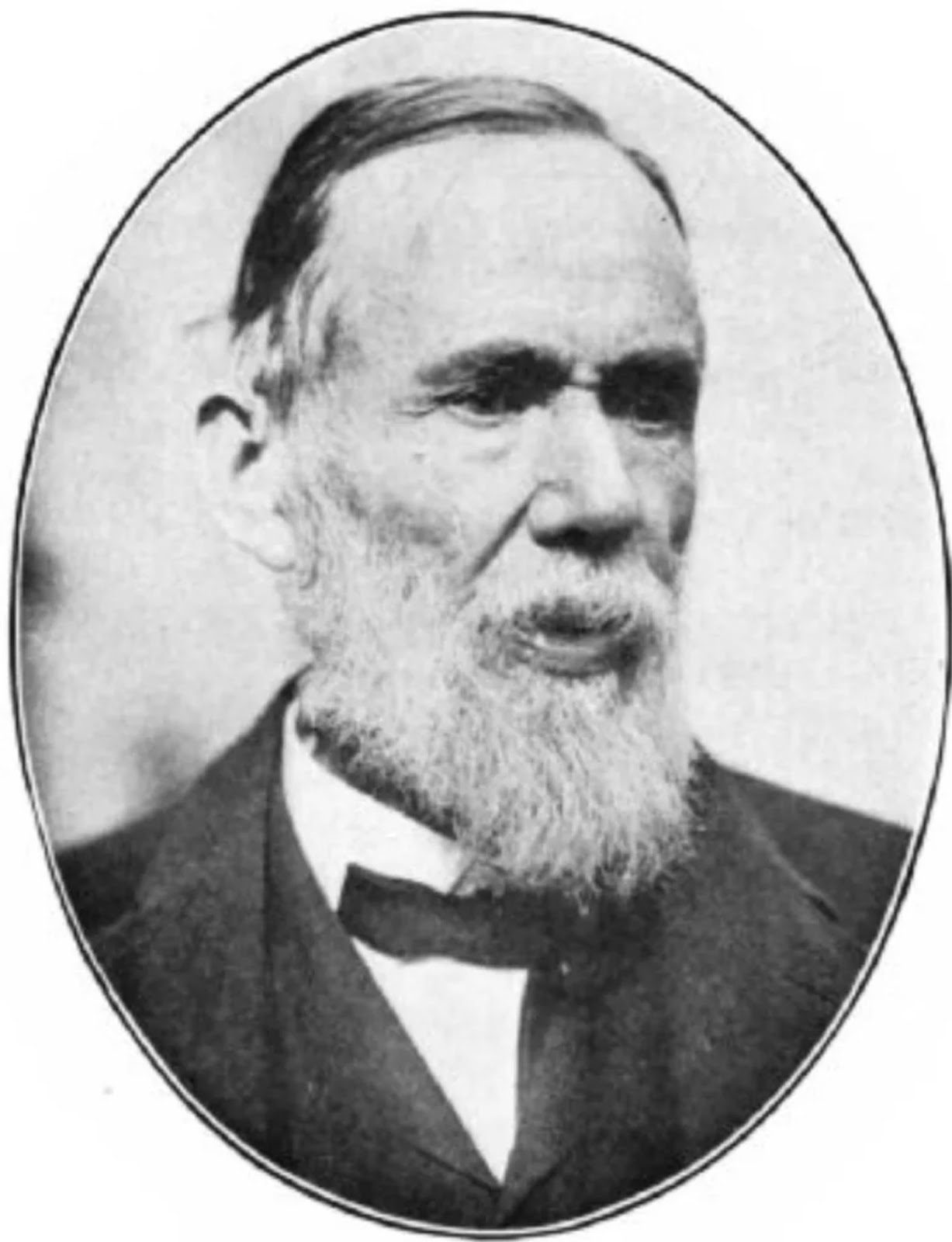
John Arbuckle was born in Pittsburgh in 1839 as the son of a Scottish-Irish immigrant. Young John attended the same school as future tycoons Henry Phipps and Andrew Carnegie. He dropped out of Washington and Jefferson College to join his brother Charles in a wholesale grocery business in Pittsburgh. After Arbuckle invented devices for weighing and packaging coffee, it led to the emergence of a popular coffee brand, which he named Arbuckle Ariosa. This coffee is still being sold today.
Ariosa coffee was packed in small, branded one-pound packets of freshly ground coffee. It was sold across the country. Ariosa was nicknamed “cowboy coffee” since it was the brand preferred by shepherds. Iconic cowboy bonfires with a coffee pot on fire were eventually replicated in films and television, becoming legendary. They drank Arbuckle Ariosa.
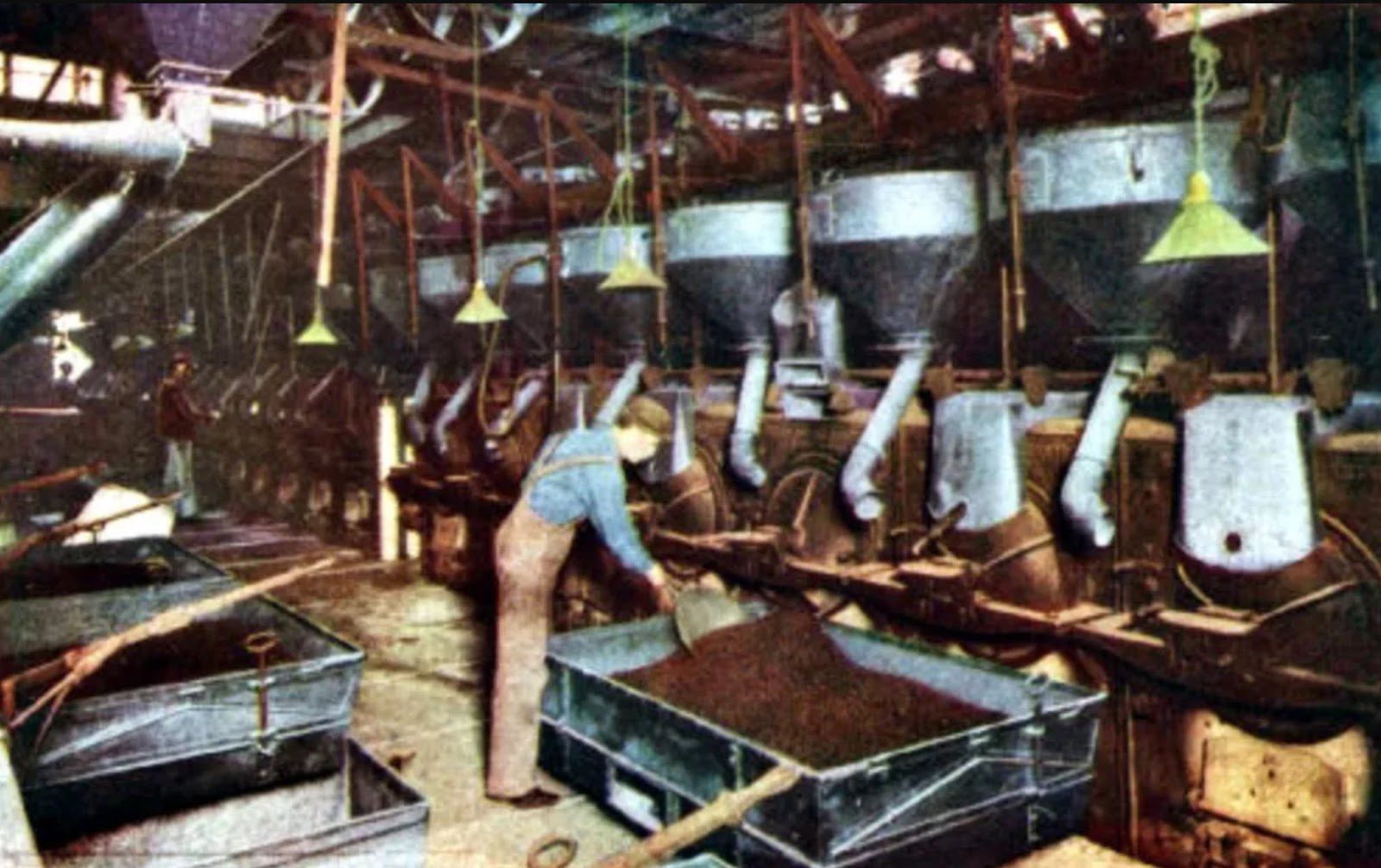
This coffee’s success was largely attributed to the roasting process. John Arbuckle devised most of the novel methods, which he wisely patented, which led to a considerable rise in revenue for the company. For example, his first invention was the use of eggs and sugar in a glaze to coat raw beans and seal the flavor.
Arbuckle subsequently became the world’s largest coffee importer. In the late 1800s, he relocated to Clinton Avenue in Brooklyn and established an office on the opposite bank of the East River, at the intersection of Old Slip and Water streets. Every day, he walked to and from work, past tramps and movers on the embankment. Many people who worked in John Arbuckle’s office sought his support, especially those who were motivated by financial difficulties.
Arbuckle belonged to the Plymouth Church, which was led by the well-known abolitionist and reformer Reverend Henry Ward Beecher. He had a significant influence on John Arbuckle. Thus, the businessman developed a reputation for supporting philanthropic and humanitarian causes with a passion that rivaled his commercial triumphs.
Philanthropist lifestyle
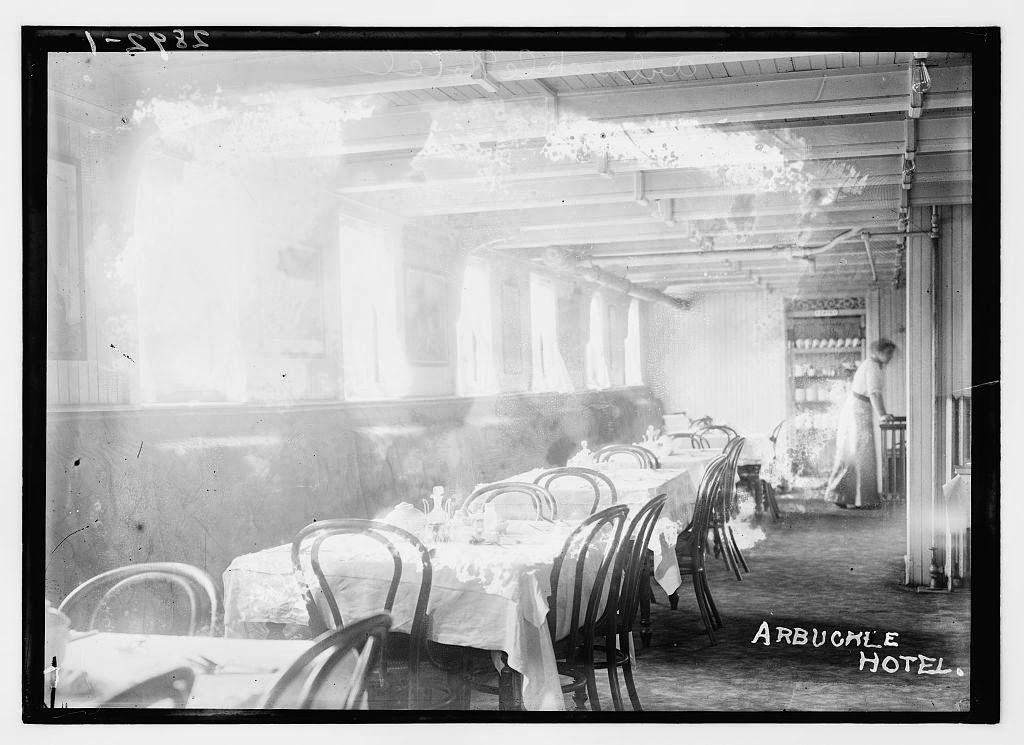
So, living in noisy and muddy Brooklyn around the turn of the century prompted him to come up with a number of eccentric ideas for helping the impoverished. He established a retirement community for the elderly on Lake Mohonk, north of New York City. He also converted a ship into the Riverside Home for Crippled Children. But all of this wasn’t enough for Arbuckle, who came up with his most ambitious idea, which centered around the no longer-new ship Jacob A. Stamler.
Thus, the floating hotel appeared. The Jacob A. Stamler was turned into a floating hotel for a hundred women, with a smaller ship nearby serving as lodging for young workers. The vessels were anchored at West 21 Street on the Hudson River, near vast passenger docks.
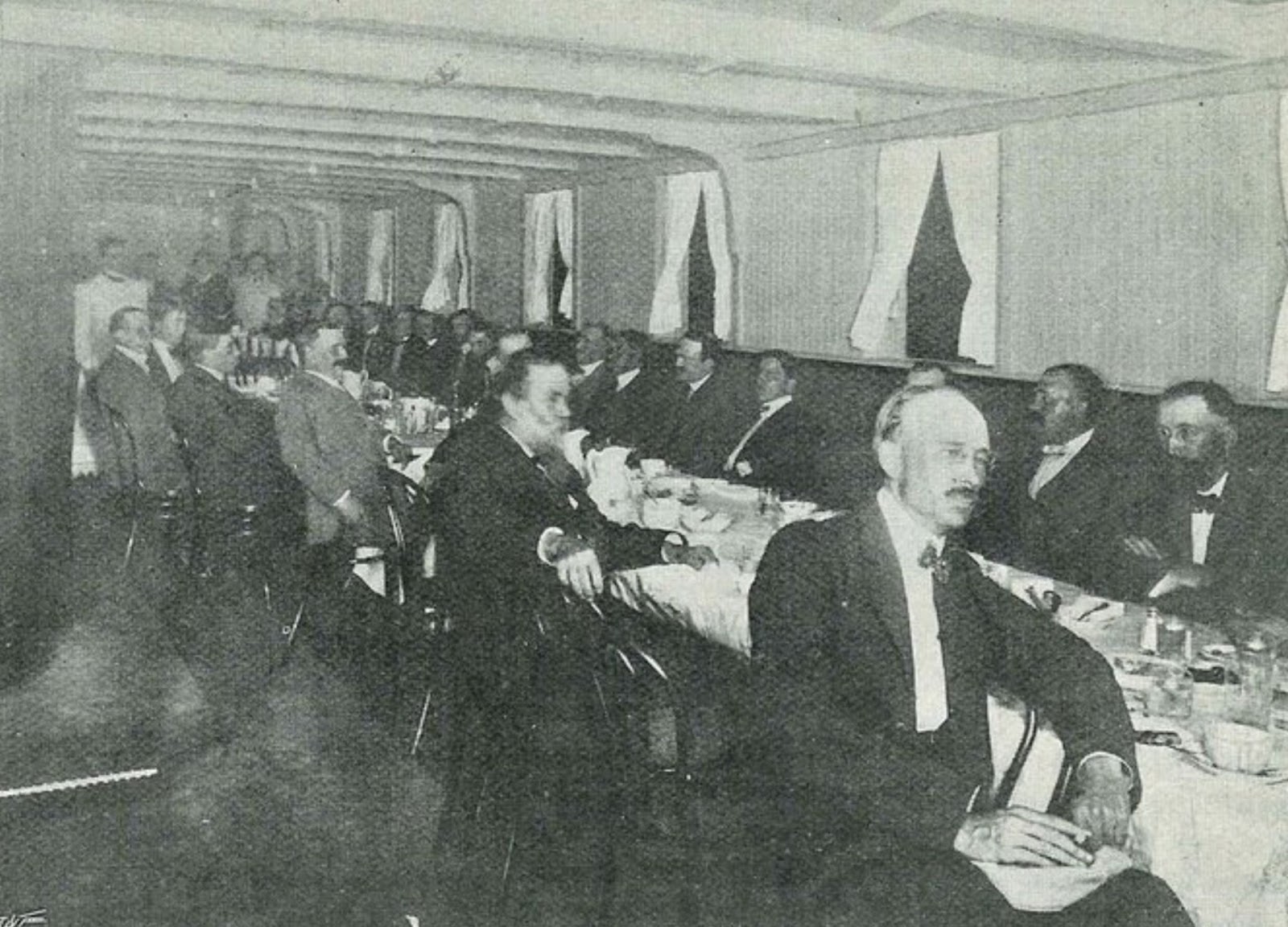
The basic idea behind this hotel concept was to help young men and women who earn low wages and want to live a decent life. It is known that in 1905, during the first year of the hotel’s operation, women paid 40 cents per day, or $2.80 per week, while young men paid 50 cents per day or $3.50 per week.
It should be mentioned that at the beginning of the twentieth century, thousands of young single women arrived in New York. While wealthier ladies could enjoy some independence while living in stylish apartments, disadvantaged women had little choice. Boarding schools were one of the available options, but they were frequently socially binding and had rather archaic rules that had to be followed. For example, in the 1890s, the moralist Young Men’s Christian Association housed hundreds of women in New York City.
Final days of the Deep Sea Hotel
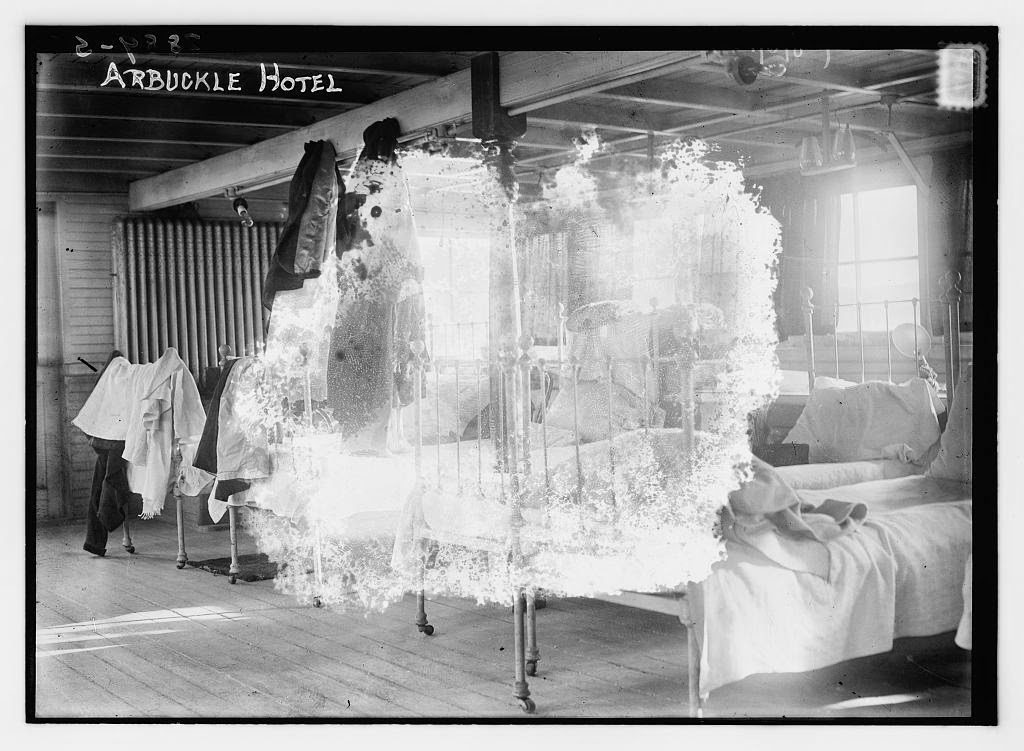
Furthermore, renting a house on one’s own, even with roommates, was often prohibitively expensive, and places with such housing did not necessarily have a good reputation. At this point, Brooklyn coffee millionaire John Arbuckle decided to come to help. His Deep Sea Hotel wasn’t really located in the depths of the sea, nor was it a hotel in the traditional sense. However, it became a home for hundreds of young single women at the end of the Gilded Age.
Over the course of the following decade, making practically no trips, the Deep Sea Hotel became a more or less semi-permanent floating residential complex. It was then known as the Working Girls Hotel. An interesting fact about its final years is that, up until 1915, the boat housed both single men and women.
There are known to be 50 girls and 16 boys among the last recorded residents. These probably refer to teenagers or young people over the age of twenty. One of the five decks was reportedly outfitted with a dance hall. Every night, when music began to play from a nearby pier, it was crowded with dancers.
Source:
- https://www.boweryboyshistory.com/2021/03/arbuckles-deep-sea-hotel-aka-working.html
- https://www.gothamcenter.org/blog/a-hot-supper-and-a-benevolent-berth-brooklynite-john-arbuckle-and-his-deep-sea-hotel-the-jacob-a-stamler
- https://www.brownstoner.com/history/dumbo-brooklyn-arbuckle-coffee-john-arbuckle-history/